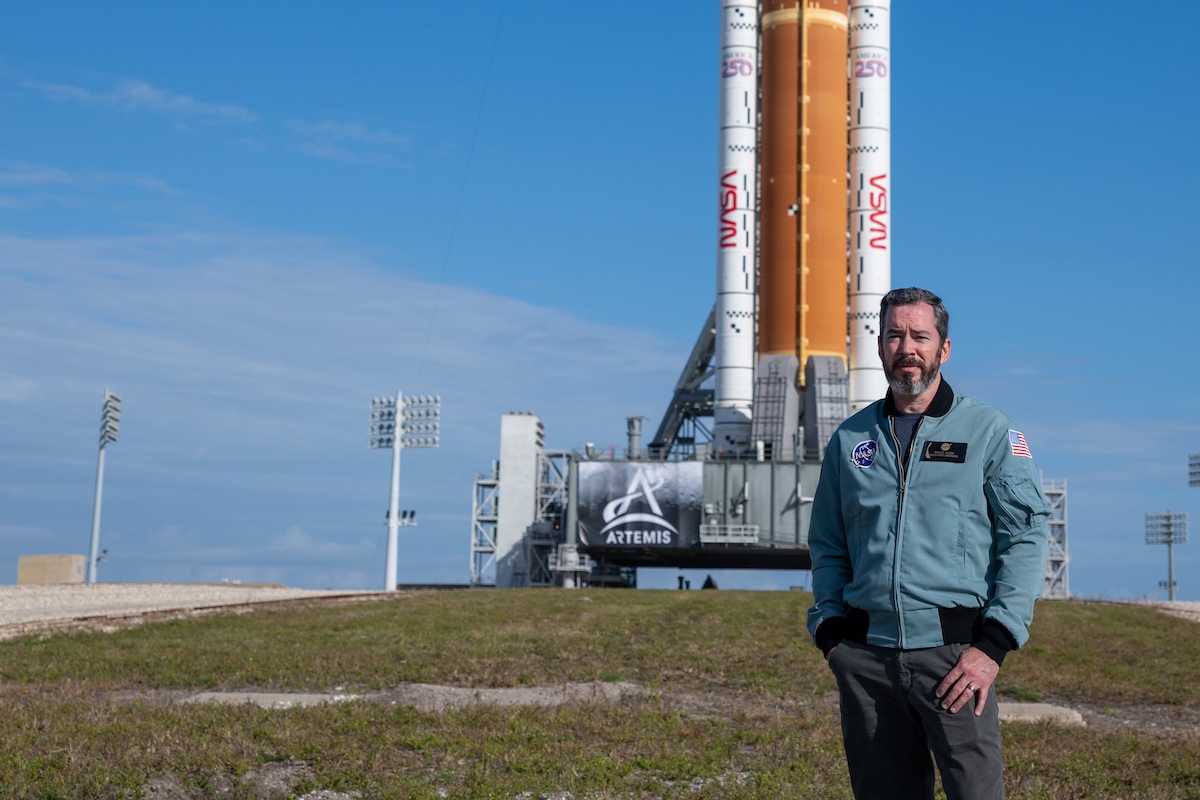
From FHU to Artemis II: Dr. Phillip Allen Helps Launch Historic Moon Mission
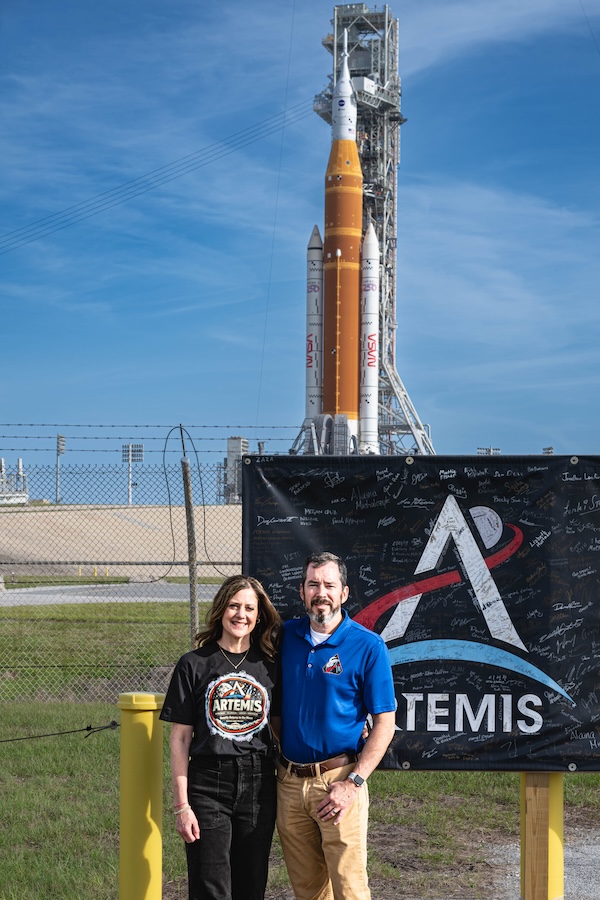
Dr. Phillip and Shannon Allen at NASA’s Kennedy Space Center ahead of the Artemis II launch.
On April 1, 2026, millions watched as Artemis II lifted into the sky, sending four astronauts on humanity’s first crewed mission around the moon in more than 50 years.
Working in Firing Room 2 of NASA’s Kennedy Space Center was Dr. Phillip Allen, deputy chief engineer for NASA’s Space Launch System (SLS) program — and a former Freed-Hardeman pre-engineering student.
Thirty years after his time at FHU, Allen reflected on the people, preparation and providence that helped lead him to one of the most significant moments in modern space exploration.
An Unexpected Journey
Allen calls his unexpected path to NASA a “God thing.”
Growing up on a farm in Middle Tennessee, to parents who didn’t attend college themselves, he didn’t have particular ambitions in higher education. Though he was fascinated with space from an early age, a career at NASA once felt far beyond his imagination.
“I've always been fascinated with space as far back as I could remember, but I'd had no idea that I could ever work for NASA,” he said. “That was beyond what was even in comprehension.”
As a kid, Allen built model rockets and showed a natural aptitude for math and science, so when people suggested he might look into engineering, he decided to give it a try. After graduating as valedictorian from Columbia Academy’s class of 1993, he enrolled in FHU’s pre-engineering program that fall.
There he met his future wife, Shannon Hays Allen, and formed other friendships and connections that would continue shaping his future. “For somebody who grew up in a small town with a small school, it was a good place to go and make lots of good friends,” he said. “It also fully prepared me for the next steps in school.”
In 1996, Allen and his new wife both transferred to Memphis schools to continue their education. He finished his undergraduate degree at the University of Memphis and then went on to earn both a master’s degree and Ph.D. in mechanical engineering from Tennessee Technological University in Cookeville.
Looking back, Allen sees a clear thread of providence connecting each stage of his journey. Relationships formed during his time at Freed-Hardeman opened doors he never could have anticipated. One connection led him to a professor at Tennessee Tech, which eventually led to a graduate internship at NASA — and ultimately, a career building the kinds of rockets he once only dreamed about.
“It was not my plan,” he said. “I'm convinced it was God's plan.”
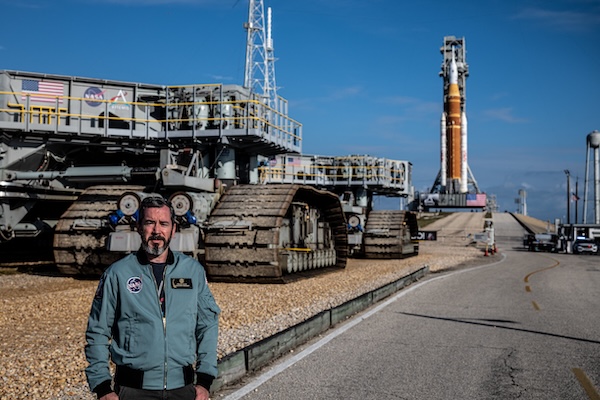
Former FHU pre-engineering student Dr. Phillip Allen now serves as deputy chief engineer for NASA’s Space Launch System program.
Engineering Artemis II
Today, Allen serves as deputy chief engineer for NASA’s SLS rocket system at NASA’s Marshall Space Flight Center in Huntsville, Alabama, working alongside the chief engineer to help direct the efforts of approximately 5,000 engineers across the country.
For Artemis II, Allen helped oversee the engineering coordination of the entire launch vehicle, working with chief engineers responsible for each major rocket component, including the core stage, solid rocket boosters, liquid engines and upper stage.
He calls his team “the chief problem solvers and the chief integrators; we integrate hardware together and also try to integrate people to work together to solve problems.”
Leading up to launch, they ran extensive simulations (or SIMS) to lead the whole team through the launch campaign, making sure that all elements — equipment and people — worked together exactly as they should.
When launch day arrived on April 1, Allen was stationed in Firing Room 2 at Kennedy Space Center to monitor systems, integrate the solution to any problems with the rocket, address concerns and ultimately recommend a “go” or “no-go” for launch.
While there were nerves and excitement, Allen said that the primary feeling in the room was intense focus. “The analogy I would use would be a championship team that has practiced, and now it’s game day.”
The first 8 ½ minutes were the mission’s most critical, as the crew capsule was launched into its intended orbit. Once that phase was complete, Allen and his team quickly reviewed performance data to make sure that the rocket performed well and there were no dangers to the capsule. What they found exceeded expectations.
“It was as clean of a launch as you would ever see,” he said. “Our velocity and positional accuracy were greater than 99.9%. It was a bull's eye, right where we wanted to put them.”
After the astronauts’ return, Commander Reid Wiseman even told the SLS program manager that it was “the smoothest ride he’s ever had on a rocket.”
Paying It Forward
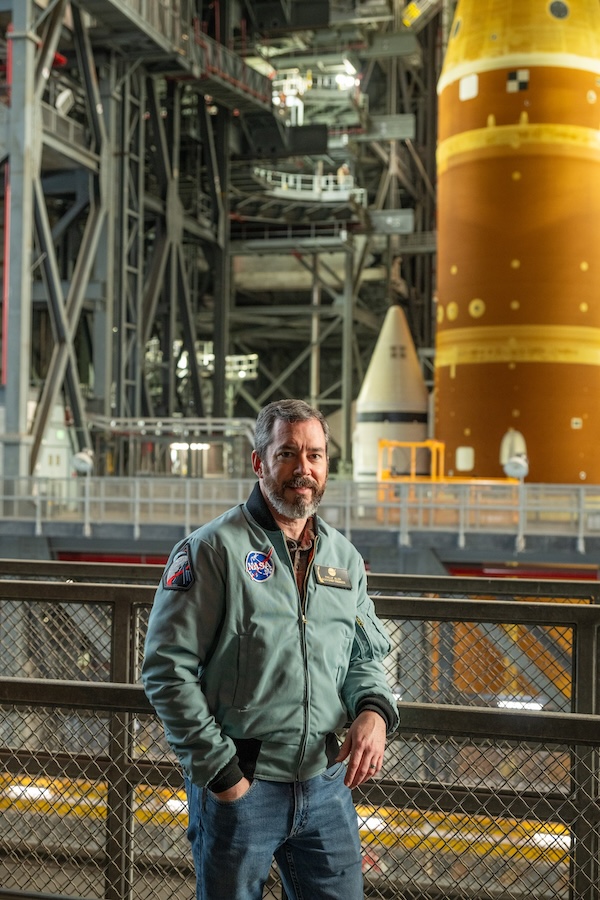
In his role, Allen now frequently mentors younger engineers who are just beginning their careers. He enjoys investing in others the same way others once invested in him.
One lesson he likes to share is that technical knowledge alone is not enough. While math and science skills are essential, Allen believes strong communication skills are equally critical — and often much more complicated.
“You can have the best idea in the world, but if you can’t explain it to somebody then it has no power. People can’t make the right decisions if you can’t communicate it to them.”
He also stresses the power of building strong relationships in one’s life and career. Allen maintains that his relationships helped get him where he is now and that he would be nothing without the strong team of other engineers that surrounded him.
Understanding how to collaborate with others, consider different perspectives and adapt to change, he said, are among the most important “soft skills” any professional can and should develop.
The Heavens Declare the Glory of God
Even before Artemis II returned home, Allen and his team were already focused on what comes next. Artemis III, currently targeted for 2027, will focus on practicing docking procedures with commercial landers in Earth orbit as NASA continues preparing for a future lunar landing.
As global interest in space exploration continues to grow, Allen said one of the most meaningful parts of the Artemis II mission was seeing the amazing images captured by the crew.
Along with the rest of the world, he found himself in awe of the newly shared views of the Earth and moon. “Those sights were breathtaking and humbling,” he said. “Words can’t really describe it.”
And while he’s proud to have been a part of this historic human achievement, he hopes that the real power of this moment comes from the cosmic reminder of God’s gifts.
“I really want to take this as an opportunity for people to focus on God’s creation and to see this beautiful planet that he’s given us,” Allen said. “Let's just hope this whole thing brings glory to God and that people will focus on loving each other and loving him a little more from this whole experience.”
