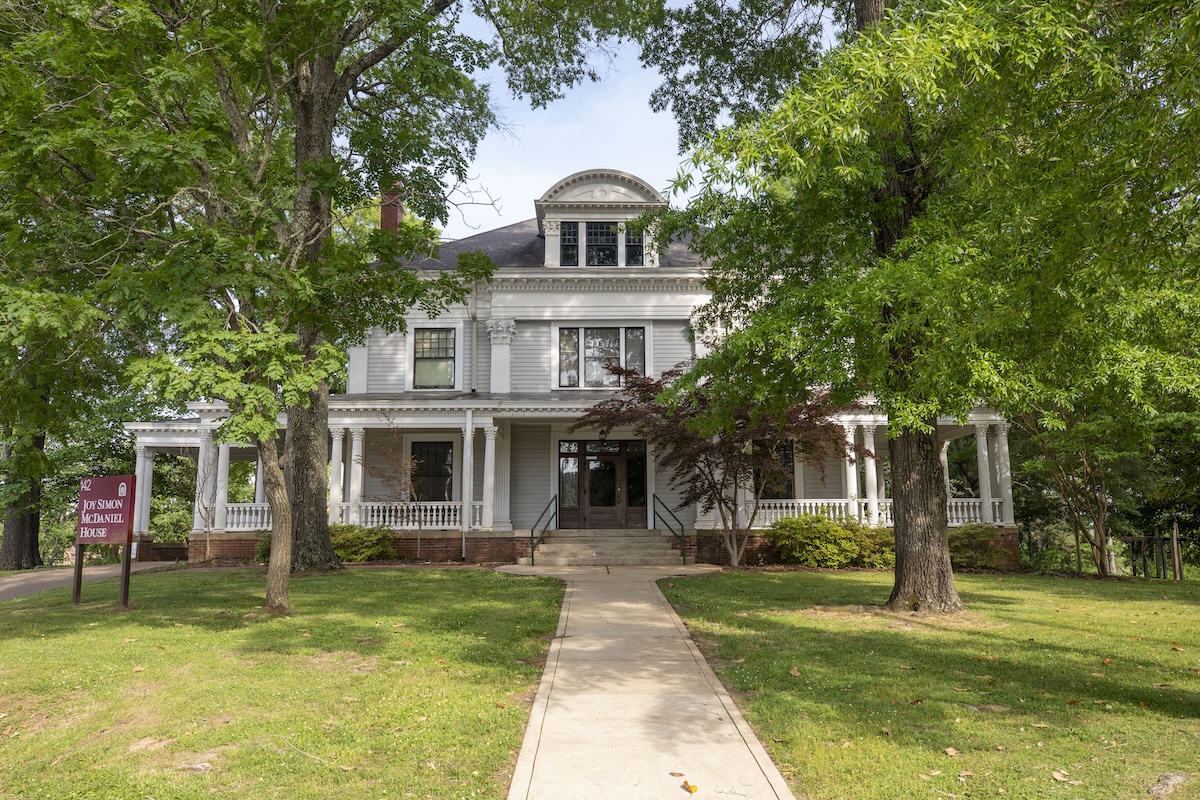
On a street lined with student dormitories, a massive multipurpose auditorium and a state-of-the-art sports complex, a house sits that seems almost misplaced in time. Its classical turn-of-the-century beauty draws the eye and often invites curious visitors to stop in for a look around. For more than a century, this stately home, now known as the Joy Simon McDaniel House, has played an important role in the communities of both Henderson and Freed-Hardeman. While certain details still remain a mystery, some local history is now seeing the light thanks to the tireless efforts of several passionate and dedicated amateur historians who are eager to tell the story of a house which has been loved by so many.


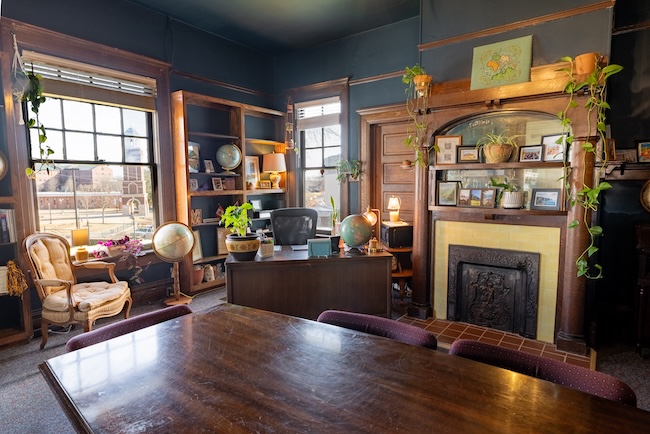
“I was always interested in this house as a student,” said Grant Goodman (FHU class of 2020), who first developed a personal interest in the McDaniel House during his time as an undergraduate. “I’d walk by the house often, and I’d hang out here sometimes. I loved to play music on the porch.”
When Goodman later began pursuing a master’s degree in history, his interest led him to undertake a project on the history of the McDaniel House — which has gone by many names over the years. He had often heard and repeated the common rumor that it was originally a Sears catalog house. In the early 20th century, thousands of “mail order homes” were sold by Sears, Roebuck and Co., with kits of building materials being shipped by rail and then assembled on site. However, Goodman’s research quickly revealed that the evidence for the origins of the house was pointing in a different direction.
During his three years serving as FHU’s associate director of international education, working out of an office in this very house, Goodman continued his personal project. With help from a team of fellow history enthusiasts, including former students Mallorie Hammond and Isabella Baker, Goodman visited courthouses and property assessors, dug through paperwork and reached out to knowledgeable sources, uncovering many fascinating details about the history of the house, the architect who designed it and the family who once called it home.
Rather than being one of thousands of identical Sears catalog homes, evidence suggests that the McDaniel House was designed by the prolific architect Hubert T. McGee, whose many other creations can still be seen across Henderson, Savannah, Memphis and beyond. A native of Jacks Creek, Tennessee, McGee received his early education in Henderson before gaining further architectural training and experience in Jackson, Memphis and St. Louis.
His unique style should be familiar to many Freed-Hardeman alumni, even if his name is not, as McGee can be credited with recognizable buildings including the Old Main Administration Building, Draughon Center for the Musical Arts, Hall-Roland Hall, Paul Gray Hall, the Hardeman House, the Thomas Landon House and the former Milan-Sitka building. In fact, he introduced Freed-Hardeman to what would become its famous belltower symbol, inspired by both Old Main and Milan-Sitka designs.
Additional McGee designs include the Chester County Courthouse, several historic homes in Savannah, churches and apartment complexes in Memphis, and — perhaps most famously — Memphis’s Pink Palace Museum, originally designed as a private residence for Piggly Wiggly founder Clarence Saunders.
As a member of the Memphis Architects’ League, McGee’s association with the McDaniel House was verified in a 1913 “Architectural Exhibition” catalog, where McGee submitted a photo of the house as an example of his work. Though records don’t pinpoint an exact construction date, land and ownership records suggest that the house was likely built around 1908-09. Since McGee was working from an office in Memphis at the time, it’s possible that the house was designed and manufactured there before being shipped for assembly in Henderson — a detail which likely contributed to the Sears catalog rumors.

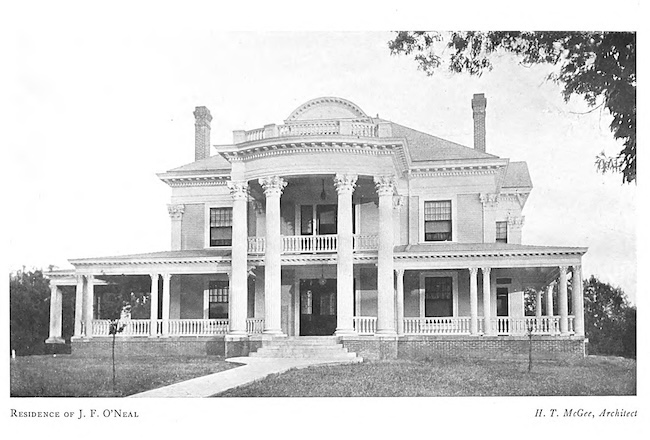

The 1913 photo also designates the house as the “Residence of J.F. O’Neal,” identifying John Fenner O’Neal, whose family was well known to Henderson in the early 20th century. His father, John Francis O’Neal, had established the J.F. O’Neal & Co. general store in 1876 and also served as president of First State Bank in Henderson and as a trustee of the school that would eventually become FHU.
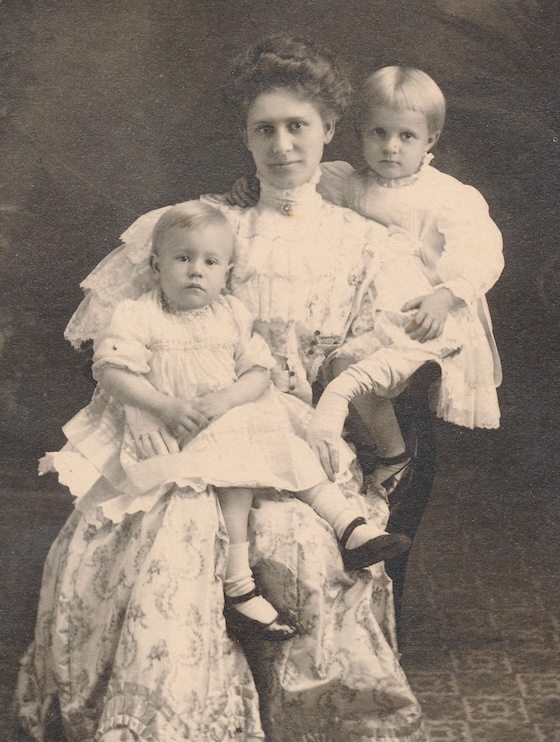
When completed, the house became home to John Fenner O’Neal, his first wife, Mamie (Pratt), and their two young children. Surrounding streets were primarily residential at that time, and the O’Neal house (as it was then called) would have had an ideal view of the town. Old photographs provide a glimpse into the beauty of such homes in their prime, with the original front columns of the O’Neal house on full display.
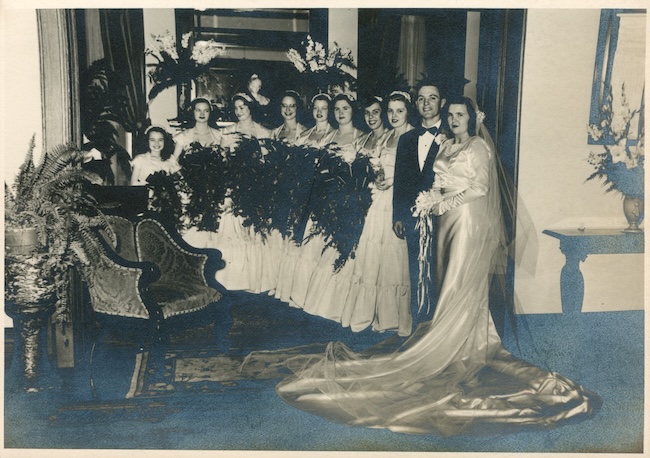
After the death of his first wife, O’Neal married Mary McCorkle, and together they had one daughter, Jane, in 1927. At O’Neal’s death in 1934, the house passed to his wife and later to the Purdy family (relatives of Mary) in 1945. Even after the change in ownership, Jane O’Neal maintained her connection to the home, hosting her wedding reception there in 1950 when she married her college sweetheart, Robert Naquin.

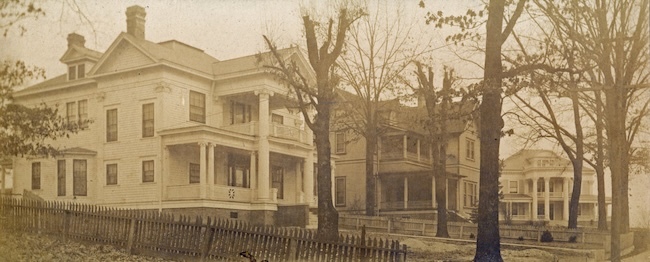
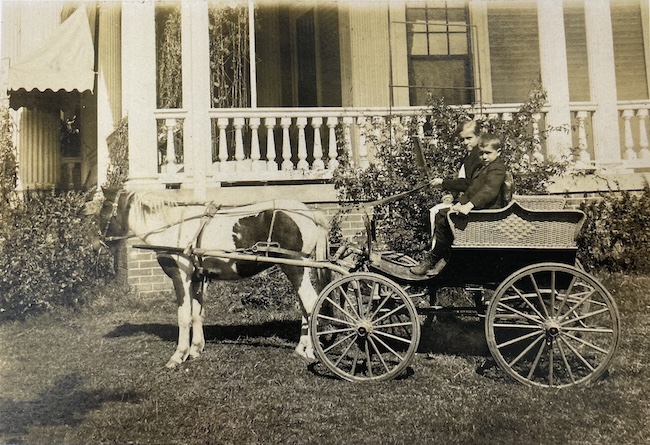
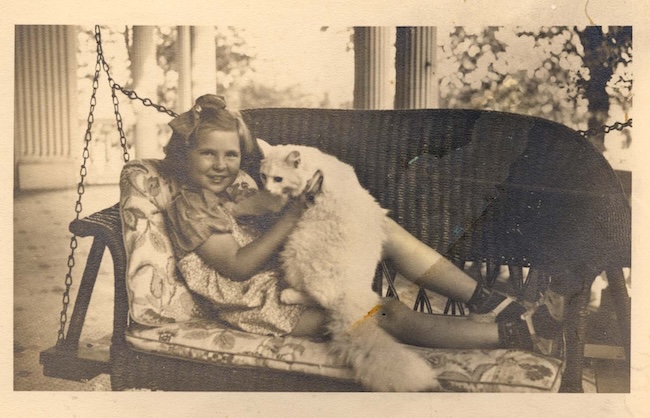
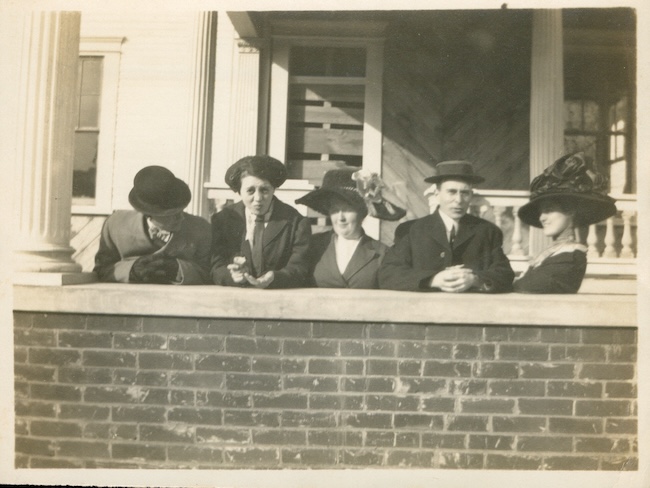
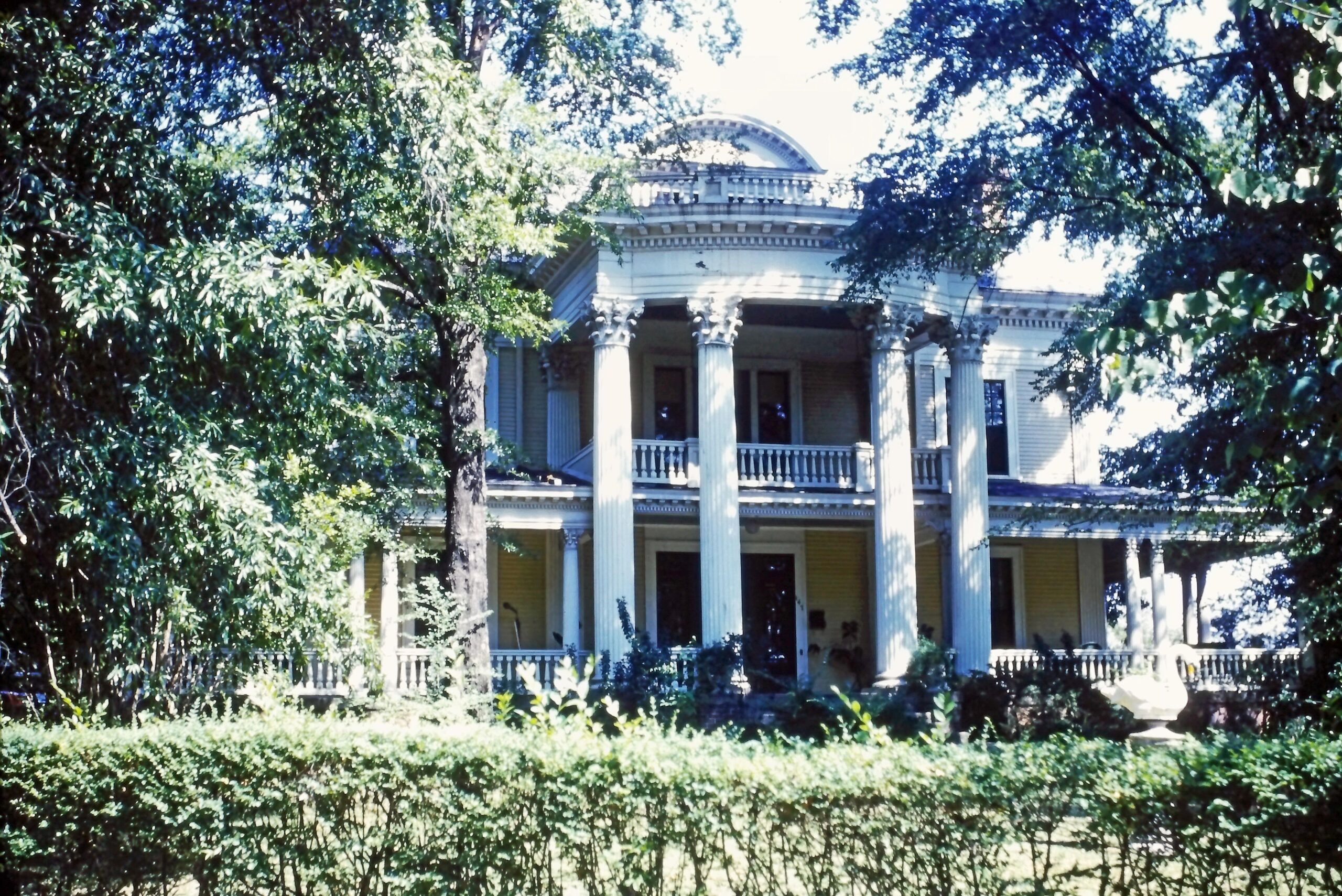
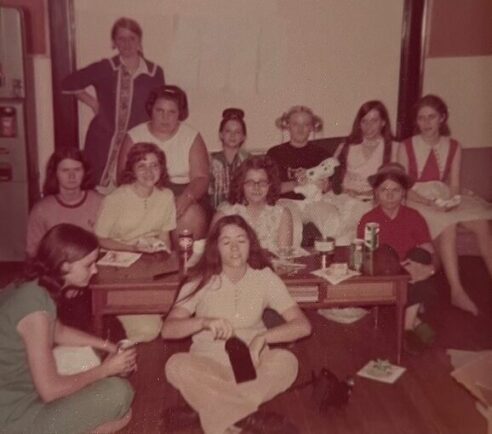

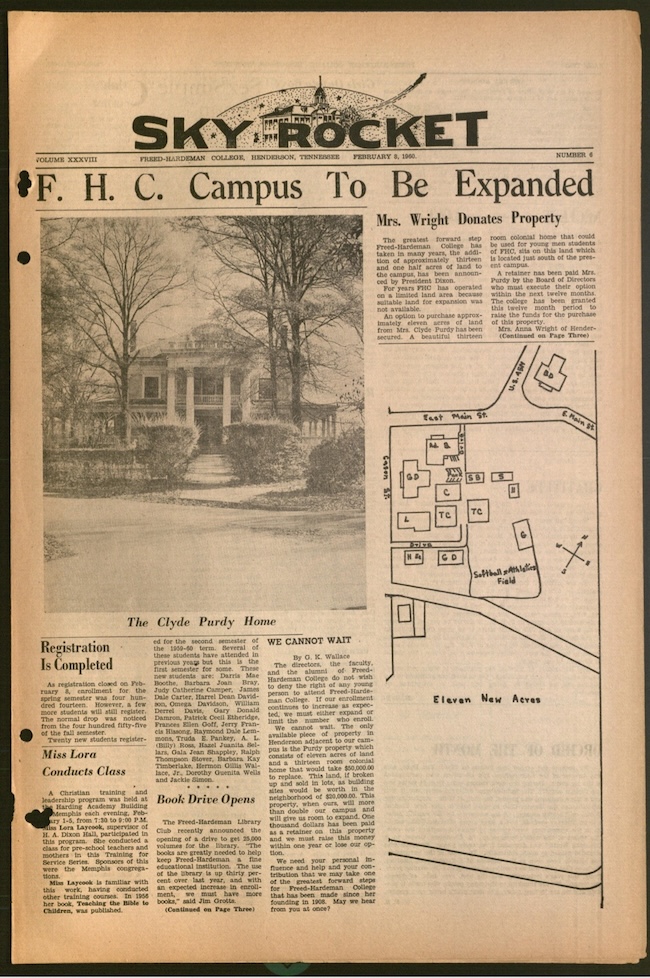
The house was eventually acquired by Freed-Hardeman in 1960 when Mrs. Clyde Purdy sold 11 acres of land, including the 13-room home, to the college, significantly expanding the campus. It served the school in many different ways over the next several years — as a men’s dorm in the 1960s (briefly named Brigance Hall), as a women’s dorm in the 1970s and even as a children’s preschool during part of the 1980s.
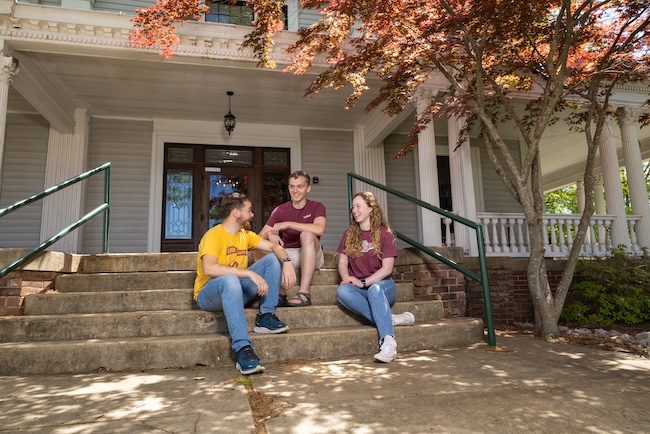
It was ultimately renamed after the 1982 death of a beloved Freed-Hardeman College instructor and early childhood education specialist, Joy Simon McDaniel. Today, the McDaniel House is home to the FHU Honors College and also holds the offices of international education as well as history, philosophy and political studies. The house and grounds remain a popular place for students to gather, take photos and play music.
Goodman admits that the building’s age and various uses have created certain quirks — clashing decorating styles, missing tiles and bricks, unreliable heat and, even occasionally raccoons. But he maintains that such details simply help to tell the story of this more than 100-year-old house. “I wonder sometimes if I’m not getting as much work done as I should because I’m just admiring it,” he said. “It’s so beautiful. It comes with its struggles, but its charm just always makes up for it.”


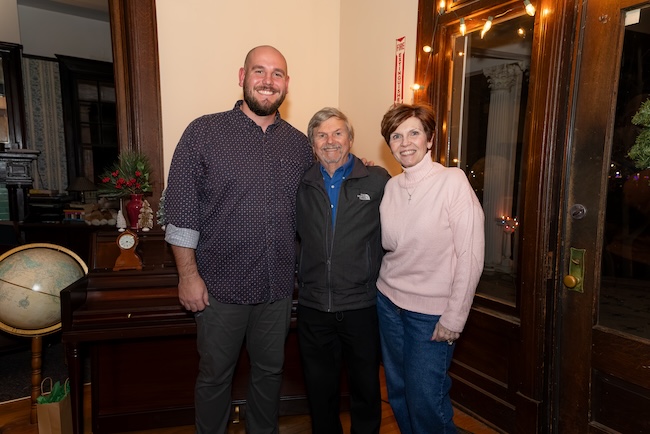
Richard Naquin, the son of Jane (O’Neal) and Robert Naquin, currently lives with his wife in Bartlett, Tennessee. Having been recently contacted by Goodman, Naquin and his wife, Lisa, decided to accept an invitation to return to his mother’s former home in December 2025. While he remembered visiting his grandmother in the house once or twice when he was very young, this return marked his first real visit in nearly 70 years.
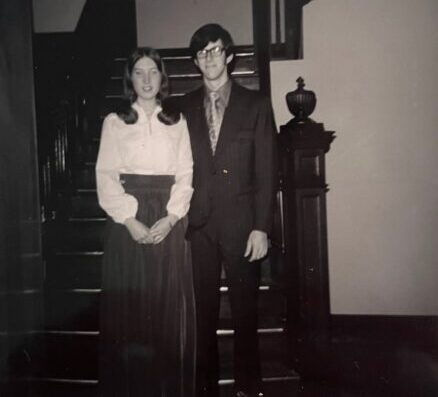
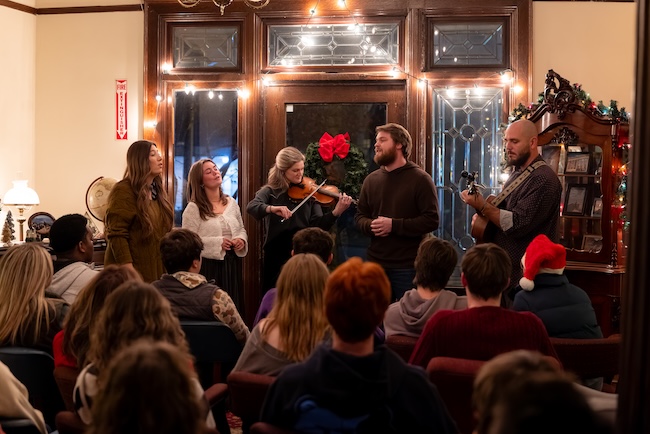
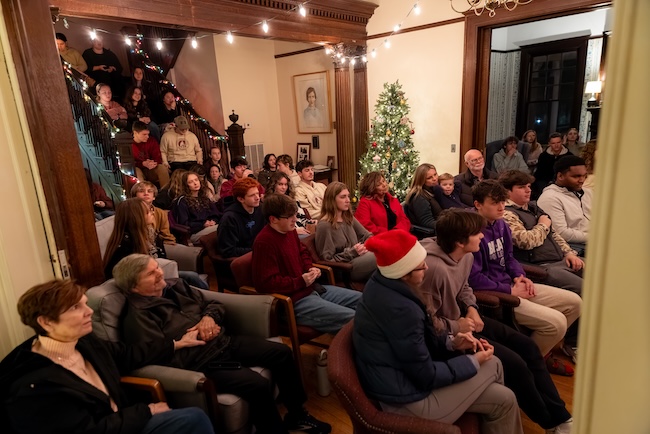
“It’s just a flood of emotions,” Naquin said, after he explored the house and grounds, which were then beautifully decorated for Christmas. He and his wife even recreated a photo of his mom and dad on their wedding day, in front of the very same fireplace. The Naquins’ visit also coincided with a popular event coined a “JSM jam session” — an evening that invites FHU student musicians or out-of-town artists to the Joy Simon McDaniel House to sing, play and perform both original and well-known songs for an intimate crowd of friends and teachers.
“I know my mom would be pleased,” Naquin said, watching the house fill with life and music. “She played the piano beautifully. She would sit at a baby grand piano, which we still have.” As a former history teacher, he expressed appreciation for what the house now represents as a part of FHU. “It’s education, it’s the arts, and it just fills my heart.”
If you have any additional information to share about the history of the house, please reach out to Mallorie Hammond, new associate director of international education, at mhammond@fhu.edu.