"The Fabulist" Takes Stage in Scotland
FHU Theatre students traveled to Edinburgh Festival Fringe in August to showcase an original play for the second time in three years.
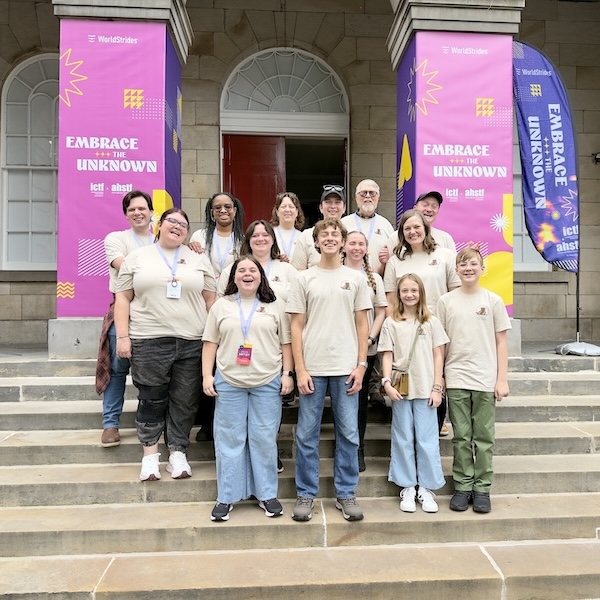
For 12 days in Scotland, 10 Freed-Hardeman University students lived surrounded by stories.
They told one of their own onstage at the Edinburgh Festival Fringe. They watched other college and professional theatre groups from around the world tell theirs. They promoted their show to strangers on Edinburgh’s streets, explored centuries of Scottish history and discovered that the message at the heart of FHU’s original production, “The Fabulist,” could be just as meaningful after the curtain came down.
Better Than the First Time
FHU was the only church of Christ school to perform at the festival. International Collegiate Theatre Festival brought from nine colleges and universities around the globe, including Freed-Hardeman. The ICTF hosts the students on a college campus and provides daily breakfast during their stay. Plans are underway for FHU to return the festival in 2029 with fundraising and sponsorships for trip expenses available for individuals to donate.
For senior Natalie Barker the trip marked her first international travel experience and a lesson in remembering rather than running from the difficult chapters of life. “I’ve experienced a lot of loss in my life,” Barker said. “‘The Fabulist’ helped me realize that even if it does hurt, I should still be able to tell the story because it was part of who I am.”
The August trip marked FHU Theatre’s second appearance at the Edinburgh Festival Fringe, the world’s largest performing arts festival. FHU first made the journey in 2023 with another original production, “The Feed.”
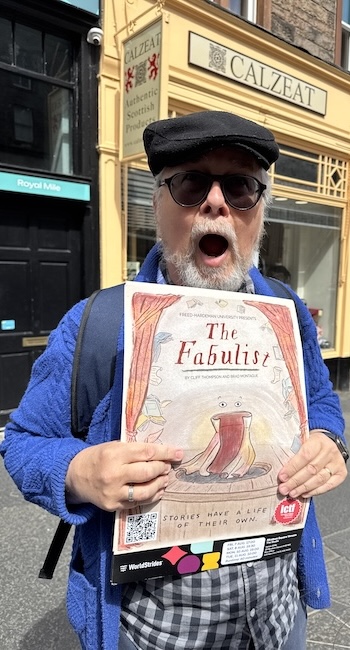
This time, the university arrived with “The Fabulist,” an original play co-written by FHU Professor of Theatre R. Cliff Thompson and New York Times bestselling author and illustrator Brad Montague.
“This experience was better than the first time,” Thompson said. “Before, we had a learning curve; we made mistakes and we learned from them. This year we put together an elegant show and received some professional reviews. The cast bonded, became braver and also learned to get around in a foreign country.”
When Stories Come Alive
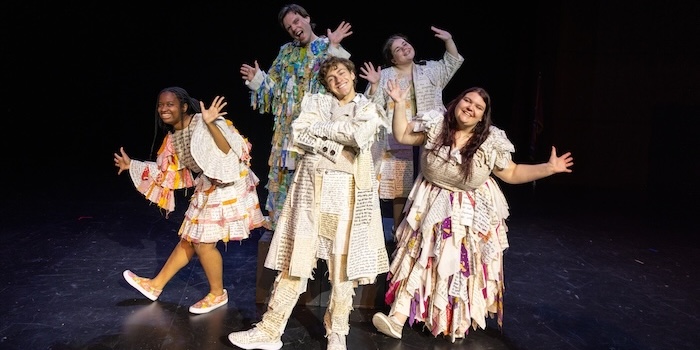
At the center of “The Fabulist” is a character named Limkin Block, a flamboyant storyteller who dazzles audiences with tales that aren’t entirely his to tell. Those stories belong to his grandmother.
When he’s confronted about his false storytelling, the characters are swept into a world where stories themselves carry consequences. Through encounters with memories, loss and truth, the characters discover the responsibility that comes with telling another person’s story.
For Barker, a senior double majoring in theatre and education, the production’s message became deeply personal. Her character, Lore, serves as a guide through the story world — someone Barker described as the “Rafiki of the story world” (referencing a character from “The Lion King”). Lore is charged with pointing the characters toward truth.
The production explores what happens when people distort stories, but also what can happen when painful stories are avoided altogether. “We honor the memories of those who’ve gone before,” Barker said. Telling those stories, she said, means the people who shaped our lives are not forgotten.
For senior Levi Secula, a double major in theatre performance and interactive digital design,
playing Limkin offered a different creative challenge. Because “The Fabulist” was an original work, he wasn’t inheriting a character defined by decades of previous productions, so he was able to witness the creation process.
“It’s a lot of fun creating a character for an original work,” Secula said. “There’s room to create the character and flesh that out.”
As Thompson and Montague developed the play, the roles also evolved around the students who would ultimately perform them. Secula found pieces of himself that could fit into Limkin and experimented with the character’s theatrical storytelling style.
Thompson and Montague worked on the story for a year — writing, rewriting and editing. “Our big takeaway is to write something that really represents who we are,” Thompson said. “I was proud to collaborate with Brad and Kristi Montague — we took notes from each other and we received a lot of positive feedback.”
The play was professionally reviewed during its festival run receiving four stars from bingefringe.com and Edfringereview.com with the reviewer calling it “a charming and energetic play about the importance of honest story telling.”
“The Fabulist” even has a possible life beyond the Fringe with talks to adapt it for other mediums, Thompson said.
Close Enough to See the Story Land
Performing at the Fringe brought another dimension to “The Fabulist.” There was little distance between the performers and audience. Secula could see faces. He could see reactions. During one particularly emotional moment involving a poem, he could see audience members tearing up.That intimacy made it impossible to completely separate the people performing the story from those receiving it.
“I’ve always known how theatre affects people,” Secula said. “To be feeling how it affects them during a show was something different.”
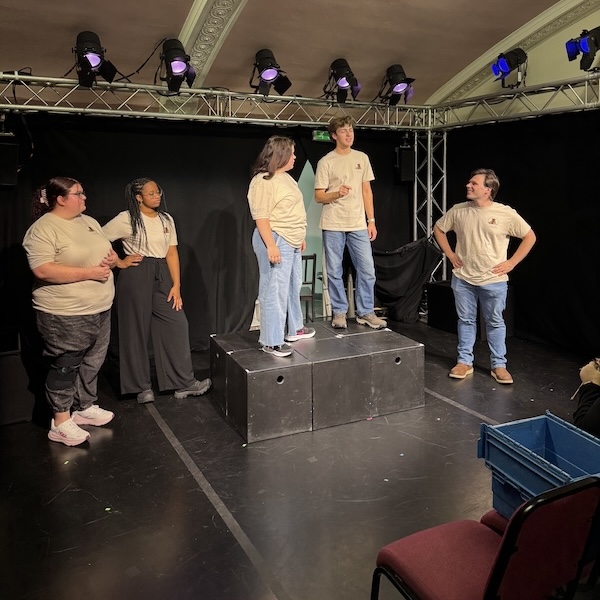
The cast performed “The Fabulist” four times in Edinburgh, with audiences growing as the run continued. The third performance came just shy of a full house, and the final performance sold out, with some prospective audience members having to be turned away.
The performances could be emotional, but Secula also remembers how playful they could become. The close setting encouraged interaction between actors and audiences, making each performance slightly different. That responsiveness was part of the Fringe experience.
Taking It to the Streets
At the Fringe, performers aren’t simply waiting backstage for audiences to arrive. Sometimes they have to find them.
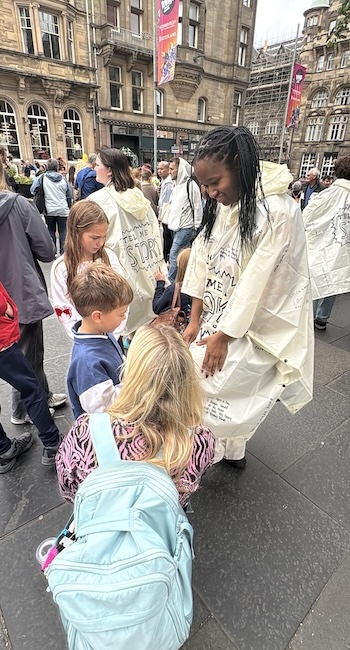
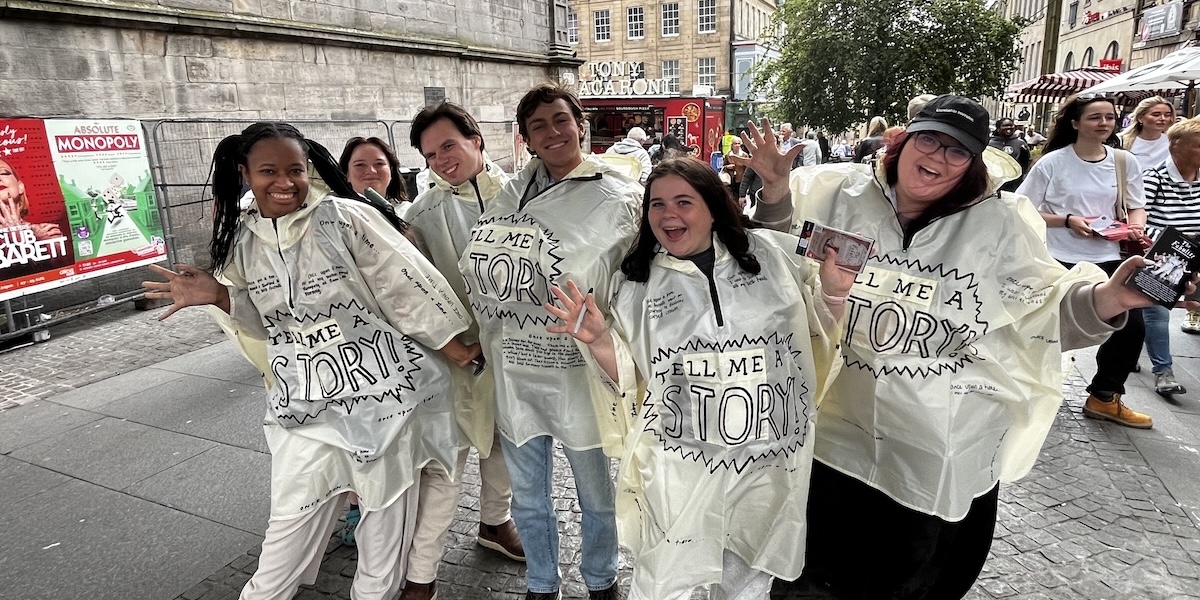
That meant busking — taking to Edinburgh’s streets to promote “The Fabulist” and interact with people passing through a city overflowing with performers competing for attention. The cast wore uniquely designed rain ponchos and invited passers-by to write a story on their ponchos. The strategy proved effective.
Barker, who said she has “a soft heart for kids,” remembers their smiles. Small encounters with joyful children eager to write their stories on their ponchos on a crowded Edinburgh street became one of the moments she carried home.
For Secula, busking was initially uncomfortable. “The first day was hard for me,” he said. By the second day, something changed. Instead of simply trying to advertise a show, he began enjoying the opportunity to meet people, share stories and create small moments with strangers.
“It pushed me out of my comfort zone,” Secula said, “and it was very rewarding.”
Learning Beyond Their Own Stage
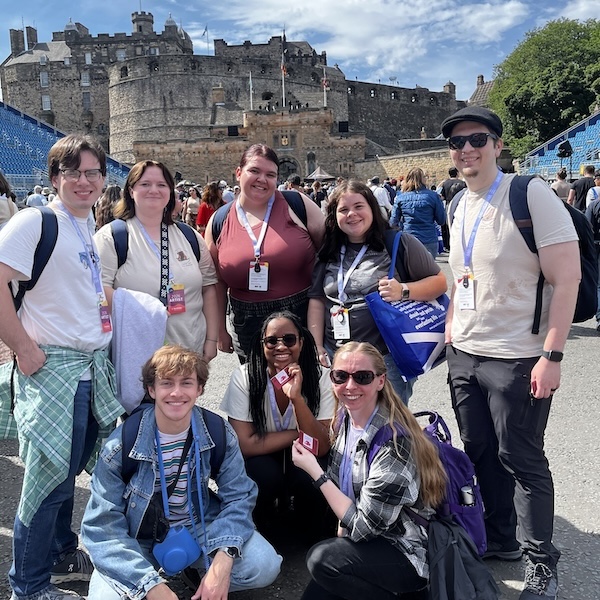
The educational experience extended well beyond FHU’s four performances. Through the International Collegiate Theatre Festival, students interacted with theatre groups from other colleges and attended their productions. Secula said spending time with other collegiate performers created a sense of community. “Being able to interact with other college groups, see their shows — it helped the experience be what it was,” he said.
The students also participated in workshops that Secula expects to influence his work beyond FHU. He returned from Scotland thinking not only as a performer but also as a future director and teacher. “The Fringe is full of lessons of how strong the imagination is,” Secula said. “Don’t limit yourself.”
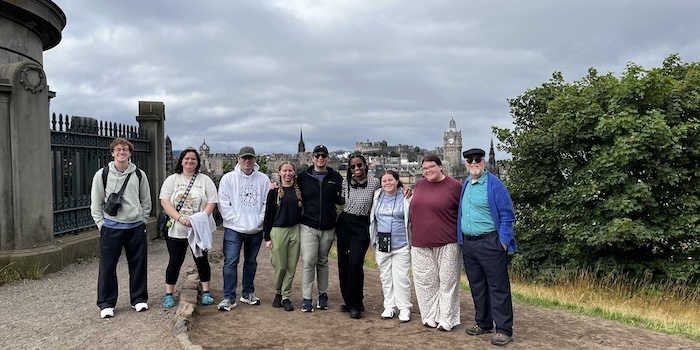
For Barker, who plans to teach, the trip offered its own education. She experienced international travel for the first time, navigated Edinburgh’s public transportation and encountered a different culture while spending nearly two weeks immersed in theatre. She and the group also visited Glasgow and Stonehaven and spent time with members of the East Kilbride Church of Christ near Glasgow.
Yet one of the simplest experiences left a lasting impression. In Edinburgh, Barker could walk past a castle as part of an ordinary day.
The extraordinary could become familiar surprisingly quickly. She didn’t want it to. “I became good at appreciating what I have around me,” Barker said.
Bringing the Story Home
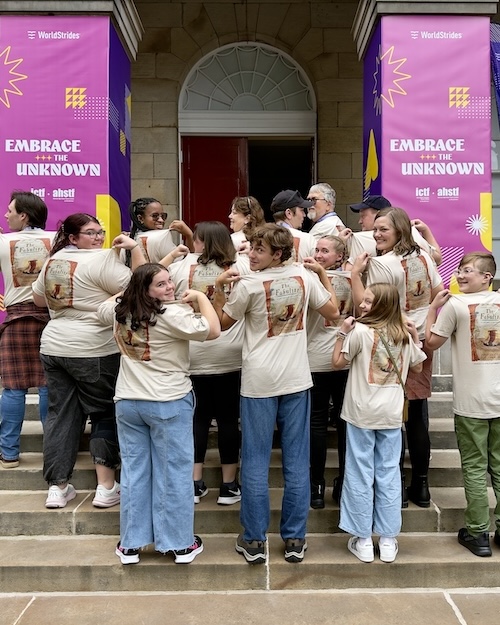
By the time the FHU students left Scotland, “The Fabulist” had done more than give them a production to perform. Its ideas about stories, memories and the people who shape them had begun echoing through their own experience.
Barker returned to FHU for a senior year that will include directing “These Shining Lives,” student teaching and preparing for her December wedding.
Secula returned with his own final-year projects ahead, including a performance capstone, and with new ideas about performance, directing and the possibilities of imagination.
Both also returned with something less tangible. Family.
“It really was a memorable experience,” Barker said. “Most of the people on the trip became family because we spent so much time together.”
Three years after FHU first carried an original production to Edinburgh with “The Feed,” another group returned with a different story and discovered once again how much can happen when students take their work beyond the familiar boundaries of campus.
For Barker, the lesson of “The Fabulist” became intertwined with the lesson of Scotland itself: Pay attention to the people around you. Appreciate where you are. Tell the stories that matter, even when they are difficult.
For Secula, the experience reinforced the possibilities of imagination — and what can happen when artists refuse to limit it.
FHU Theatre students went to Scotland to tell a story, but they came home with new ones of their own.