Barefoot Preacher Inspires Souls
FHU Alumnus Jerrie Barber attends Golden Year Reunion on the heels of Kelly Clarkson show appearance.
When several alumni returned to Freed-Hardeman University’s campus in early June for the Golden Year Reunion, Jerrie Barber came back with more than memories.
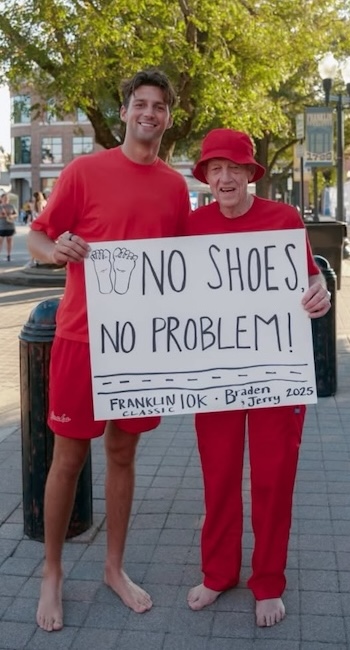
The 81-year-old member of the Class of 1966 — known to many as the “barefoot preacher” — brought a lifetime of stories, lessons learned through 65 years of preaching and a philosophy centered on service, growth and finding joy in every stage of life.
“The best time of my life is today,” said Barber, who was featured on Kelly Clarkson’s show for his notoriety for running barefoot. Watch his appearance here: youtube.com/watch?v=zvMI6dmWiGA
Barber attended Freed-Hardeman from 1963-66, completing the college’s three-year Bible program before later earning his bachelor’s degree from Lipscomb University. He was the first person in his family to attend Freed-Hardeman; his father’s formal education ended after the third grade.
For Barber, returning to Henderson for the Golden Year Reunion was another chapter in a relationship with FHU that has endured for more than six decades.
Since his days as a student, Barber has faithfully attended the university’s annual Bible Lectureship. Even during COVID-19 Barber contacted FHU Chancellor Milton Sewell to ask for permission to still attend. “I called Milton and asked him if I would be arrested if I parked off campus and sat in the back row of the balcony during the lectures. Milton said, ‘come and I’ll buy you lunch.” He also has participated in FHU’s annual Christian Training Series.
So when Barber returned for the Golden Year Reunion, he wasn’t simply visiting the campus where his ministry preparation began. He was returning to a place that has remained part of his life.

Learning to Accept Criticism
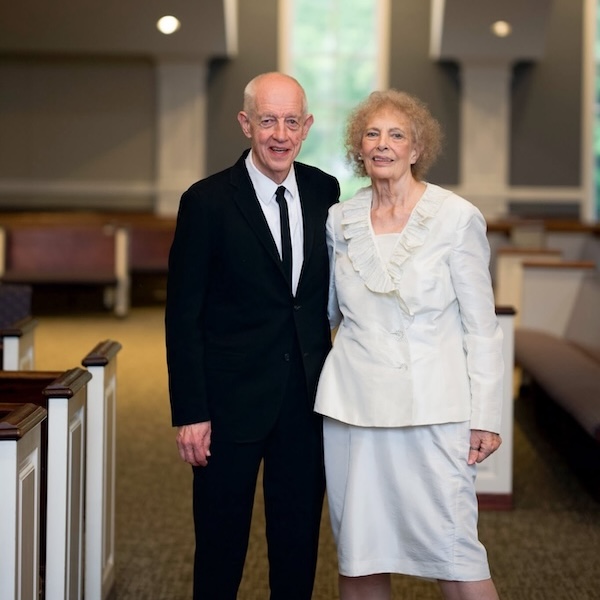
Barber began preaching at 16, before he arrived at Freed-Hardeman. He married his wife, Gail, shortly before his sophomore year at FHU. They have two children, six grandchildren and six great-grandchildren and live in Gallatin, Tennessee. Barber began his first full-time ministry in 1967. In the decades that followed, he served five congregations full time. Since 2007 they’ve served 11 churches in an interim capacity. “Many times when a preacher serves a congregation for a long time, five years or more, the church doesn’t like the next preacher because he isn’t like their last preacher,” Barber quipped. Currently, they are serving at Hartsville Pike Church.
His years in ministry brought successes, but Barber is just as willing to talk about the experiences that didn’t go according to plan. One of the most important came in December 1976, when the 31-year-old preacher was fired from the pulpit.
Years later, rather than focusing solely on what others had done, Barber began examining his own role in what happened. He eventually developed a lesson called “Three Things I Did to Help Get Myself Fired.”
One of those lessons involved criticism.
Barber admits that as a younger man, he didn’t like being criticized. He also learned that he needed to become more willing to acknowledge his own weaknesses and better manage his anger.
Today, his perspective is dramatically different. Barber teaches others how to “accept, invite and enjoy criticism.”
His experiences also shaped the way he approaches Scripture. For Barber, learning requires more than hearing or reading. It requires reflection — and sometimes a willingness to reconsider yourself.
Finding New Ways to Serve
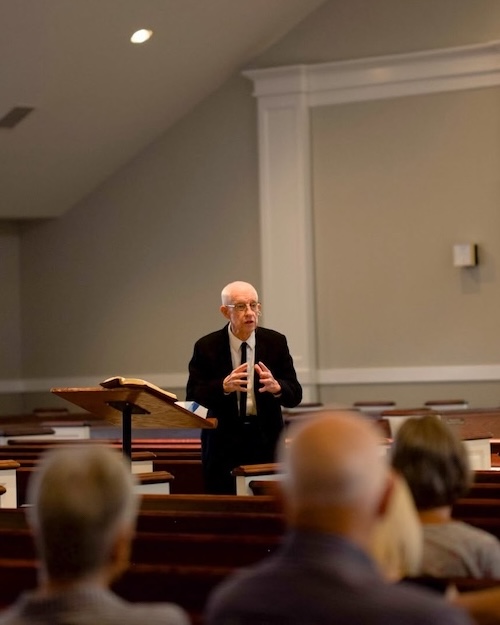
That willingness to learn eventually helped Barber develop another form of ministry. He became one of the early ministers in churches of Christ to specialize in interim ministry, helping congregations navigate the transition between permanent preachers.
Barber had seen the difficulty that could follow the departure of a long-term minister. Congregations sometimes struggled to accept the person who immediately followed a beloved preacher.
Barber found humor in the role he could play. “I volunteer to be the one they don’t like,” he said.
As an interim minister, Barber enters with the understanding that he will not become the congregation’s permanent preacher. Instead, he can help members navigate change and prepare for the person who will follow him.
His experience led to workshops helping congregations search for ministers and to his book, “Between Preachers: Interim Ministry.”
That work also reflects Barber’s view of retirement. When he retired from full-time ministry in 2007, he didn’t define retirement as quitting work. He defined it as changing gears.
For Barber, there was always another way to serve.

Production Is Better Than Perfection
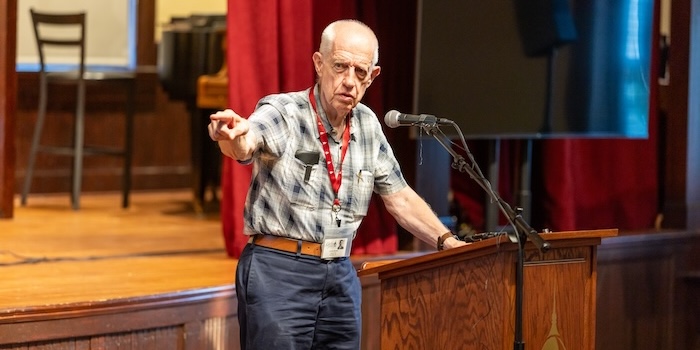
Experience also taught Barber to reconsider the idea of perfection. Rather than becoming so consumed with making something perfect that nothing gets accomplished, Barber believes in moving forward, learning and doing the work.
That philosophy followed him into an unexpected new chapter — podcasting.
About two years ago, Barber’s daughter, Christi, encouraged him to start a podcast. At first, he resisted. He didn’t want another weekly obligation, and the process of recording and editing seemed complicated.
Then he considered what came naturally. “I enjoy talking and telling stories,” Barber said. “I don’t want to write them down, but I didn’t mind talking.”
His daughter helped him get started, and his grandson, Brayden Parsons, became involved as a videographer. Barber learned how to record and edit and began turning a lifetime of experiences into stories others could hear.
His weekly podcast, “Gleaning Mustard Seeds,” has surpassed 100 episodes. Jesus told His disciples that faith, like a grain of mustard seed, can move a mountain. It presents short ideas aimed to bless individuals when the concepts are put into practice and become habits. Barber’s first rule in listening to the podcast is, “Try not to learn very much, but look for a ‘mustard seed’ that will make a difference in your life.”
For Barber, storytelling is another form of teaching. He points to Jesus’ use of parables — using what people understood to help them grasp something they didn’t.
“If we don’t tell people our story, they’ll make up their own,” Barber said.
Finding the Fun in Life
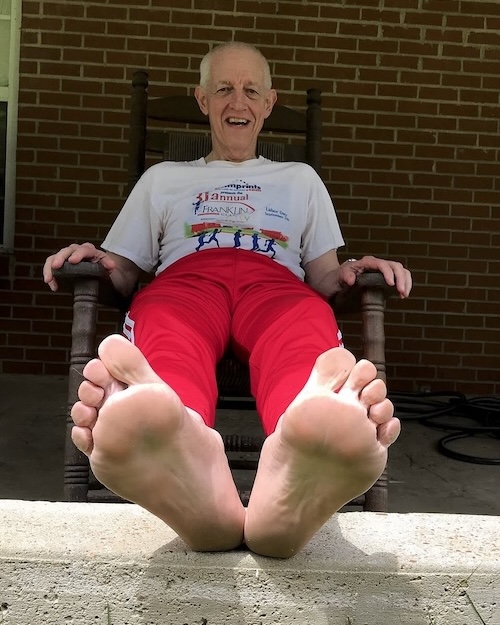
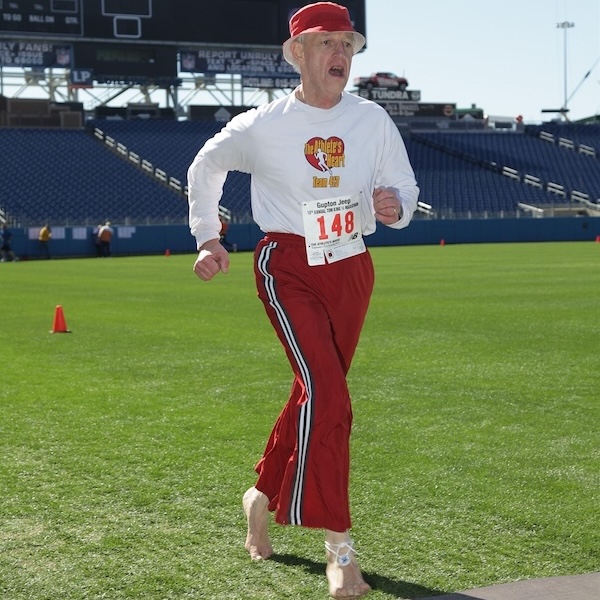
Barber’s most visible example of that philosophy may be his bare feet.
In 2009, after reading about barefoot running, he remembered how natural it had been to run without shoes as a child.
His reasoning was simple: If it was fun at 5, why wouldn’t it be fun at 65?
So he took off his shoes and started running.
Barber has since logged approximately 7,000 barefoot miles and participated in 10Ks. The unusual hobby has earned him the nickname “barefoot preacher” and even national attention.
But the miles are less important to Barber than the philosophy behind them.
“People don’t quit having fun because they get old,” Barber said. “They get old because they quit having fun.” At 81, Barber has found his fun in preaching, family, storytelling, podcasting, running and continuing to serve.
My Best Time Is Today
Barber also believes stories should be preserved.
Years before his podcast, he began recording memories about his childhood, parents, school and experiences so they could be passed to his children and grandchildren.
Today, he encourages others to do the same. Those who don’t want to write can simply record themselves talking for a few minutes.
Preserving stories is part of a larger lesson Barber has learned about people. When someone needs help, his advice begins simply: Listen.
He points to Proverbs 20:5, which describes the purposes of a person’s heart as deep waters that a person of understanding can draw out.
Barber believes people often have more of the answers within themselves than they realize. Sometimes they need someone willing to listen and help draw those answers out.
It is one of many lessons Barber carried back to Freed-Hardeman for the Golden Year Reunion — the campus where, six decades earlier, he was preparing for a lifetime he could not yet have fully imagined.
He has preached since he was 16. He has experienced success and failure, learned to welcome criticism, discovered new ways to serve, embraced new technology and run thousands of miles without shoes.
Yet when Barber looks across those 81 years, he doesn’t point to his childhood, college years or preaching career as the period he wishes he could relive.
“The best time of my life is today.”
Six decades after his FHU journey began, Barber remains focused not simply on where he has been, but on the joy and purpose he continues to find today.