April 2026
From Vision to Reality: Calendine-Davis Studio
There are moments on a campus that feel bigger than buildings.
Moments shaped by years of prayer, sacrifice and quiet persistence until one day they finally stand before you in brick, light and possibility.
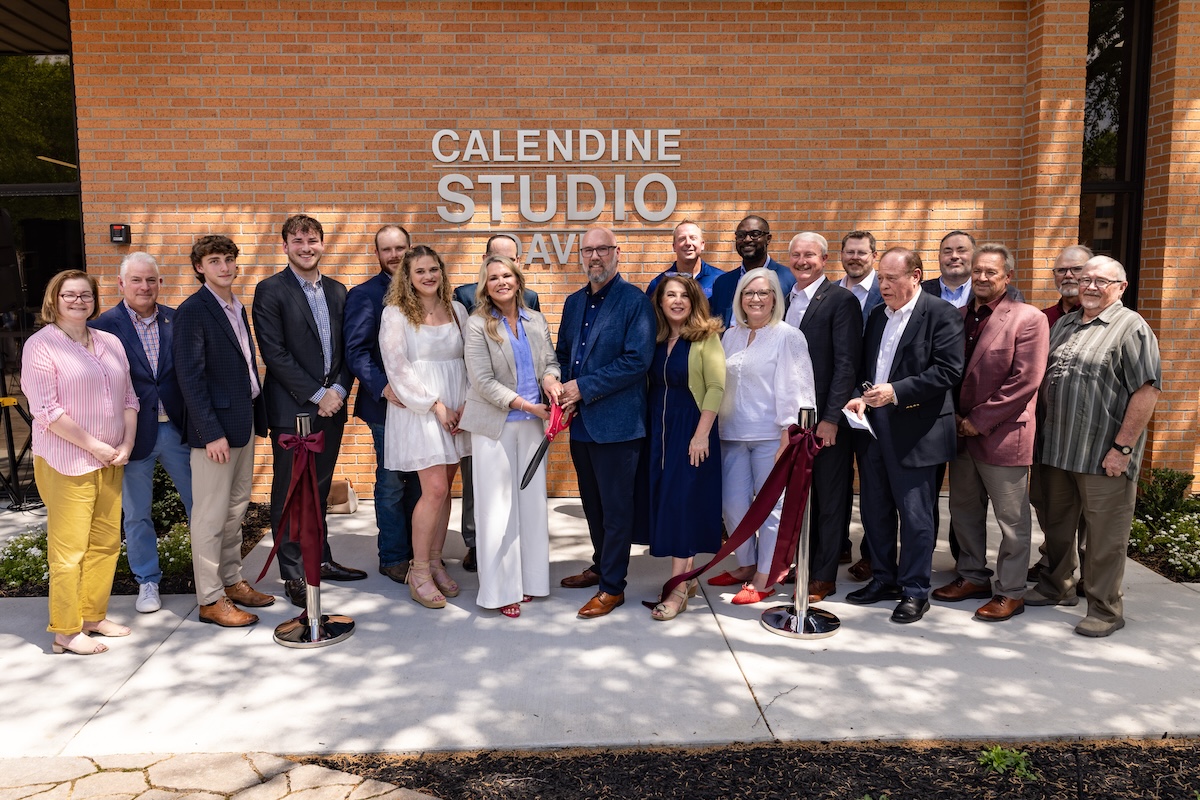
The opening of the Calendine–Davis Studio meant exactly that for alumni Dayla Calendine and Chad Calendine, whose gift fully funded the project and helped bring a longtime vision to life at Freed-Hardeman University. “We wanted to be part of something that helps students discover and develop the talents God has given them,” Calendine said. “This is about more than a space — it’s about creating opportunities and strengthening connections that will last far beyond their time here.”
The creative space, spanning more than 6,600 square feet and featuring an art gallery, digital gallery and classroom area, began not with a blueprint, but with a vision rooted in faith, creativity and community.
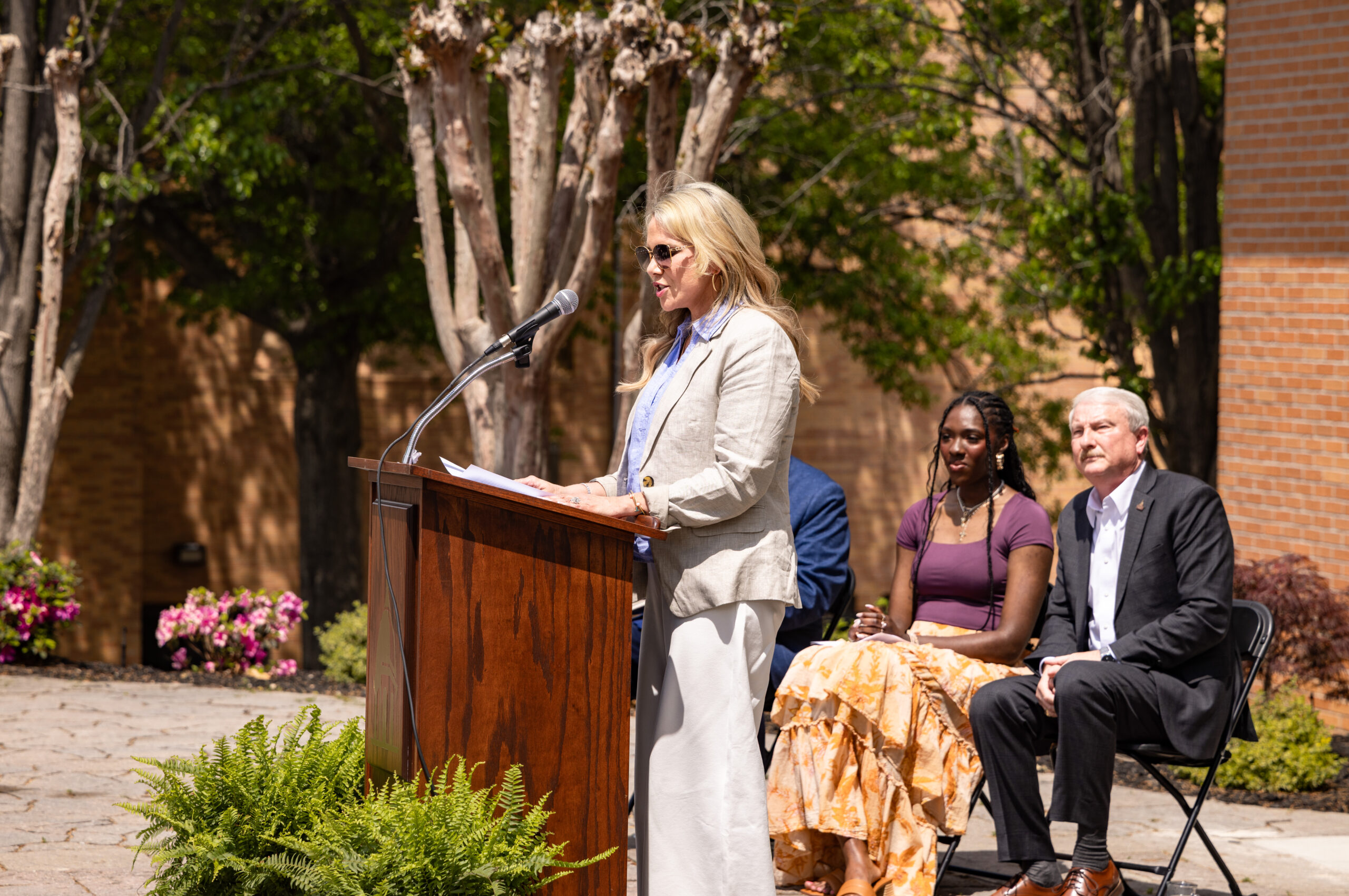
Dayla Calendine addresses a crowd of supporters during the photo studio ribbon cutting.
Where It All Began
From the moment students walk through its doors, the difference is clear. Built to support both technical training and creative exploration, the studio gives students the opportunity to sharpen their skills while discovering how their work can communicate meaning and purpose. “Image makers are trained here. Beauty is pursued here. Light is used with 21st-century skill,” Freed-Hardeman Professor of Art Jud Davis said.
For Davis, the moment carried special meaning as both an alumnus and longtime faculty member. “I’ve had the pleasure of serving here for many years,” Davis said while reflecting on his journey at Freed-Hardeman. That journey did not begin in a state-of-the-art studio. It began with something much smaller and much more personal. “My parents let me sell my baseball cards to buy my first camera,” he said. That simple act helped set the course for a life centered around image-making, storytelling and teaching others to do the same.
Over the years, Davis poured that passion into his students, helping build one of the university’s largest majors while encouraging many students to expand their studies through double majors and creative exploration.
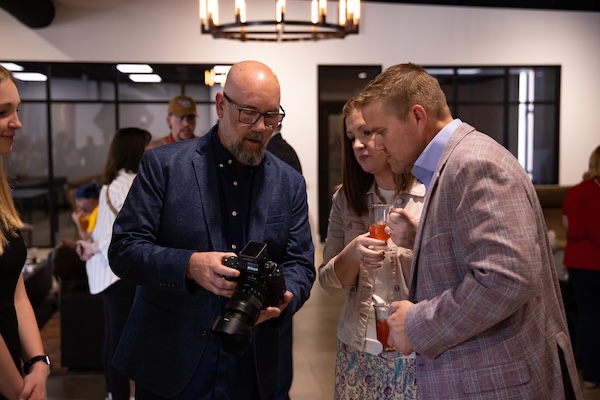
FHU professor Jud Davis shows a few photos to President Keith Harris and First Lady Lindsey during the reception.
A Community Effort
Board of Trustees member John Dodd emphasized the broader impact of the project. “It’s not just about a facility,” Dodd said. “It’s about creating an environment where students can grow, learn and be prepared for what comes next.”
Davis is also quick to point out the studio was not built alone. “I’m grateful for the people who got us to this point,” he said. He credits numerous individuals across campus who helped shape the vision and bring it to life, including retired professors Barbara England, where the original idea began, and Laquita Thomson, whose creativity helped give it form.
Davis also acknowledged the work of the university’s advancement team along with the behind-the-scenes efforts of E & T Contractors, including Jason Brashier and Shannon Sewell.
Along the way, Davis reflected on those who supported him personally and professionally, including Dave Clouse for hiring him and Milton Sewell, he joked, “for not firing me.” Through it all, one constant remained: his wife, LeAnn, and their daughter, Cecily.
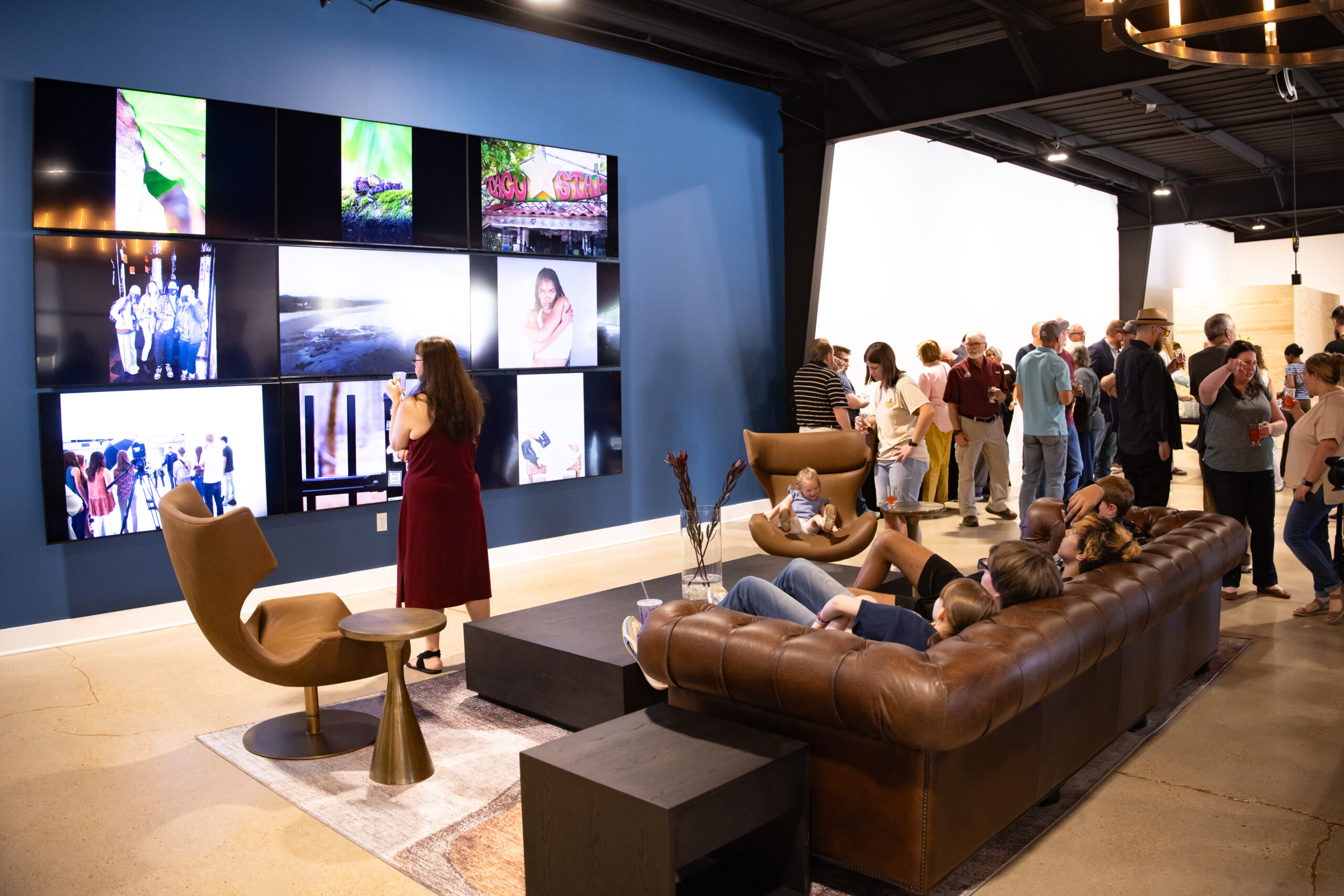
The Calendine-Davis Studio spans more than 6,600 square feet and features an art gallery, digital gallery and classroom area.
A Space Built for More
Inside the studio, every detail reflects intentionality. From the 20-foot cyclorama wall to advanced equipment, the space was designed to prepare students for the realities of modern visual storytelling. But beyond the technical aspects, the studio serves a deeper purpose.
It is a place where students are encouraged to discover and develop their God-given talents.
A place where education and faith intersect.
And ultimately, a place where purpose begins to take shape.
“This has been a long time coming,” Davis said. “A lot of people poured into this, and I’m just grateful. At the end of the day, it’s about giving people a place to learn, grow and use what they’ve been given.”
