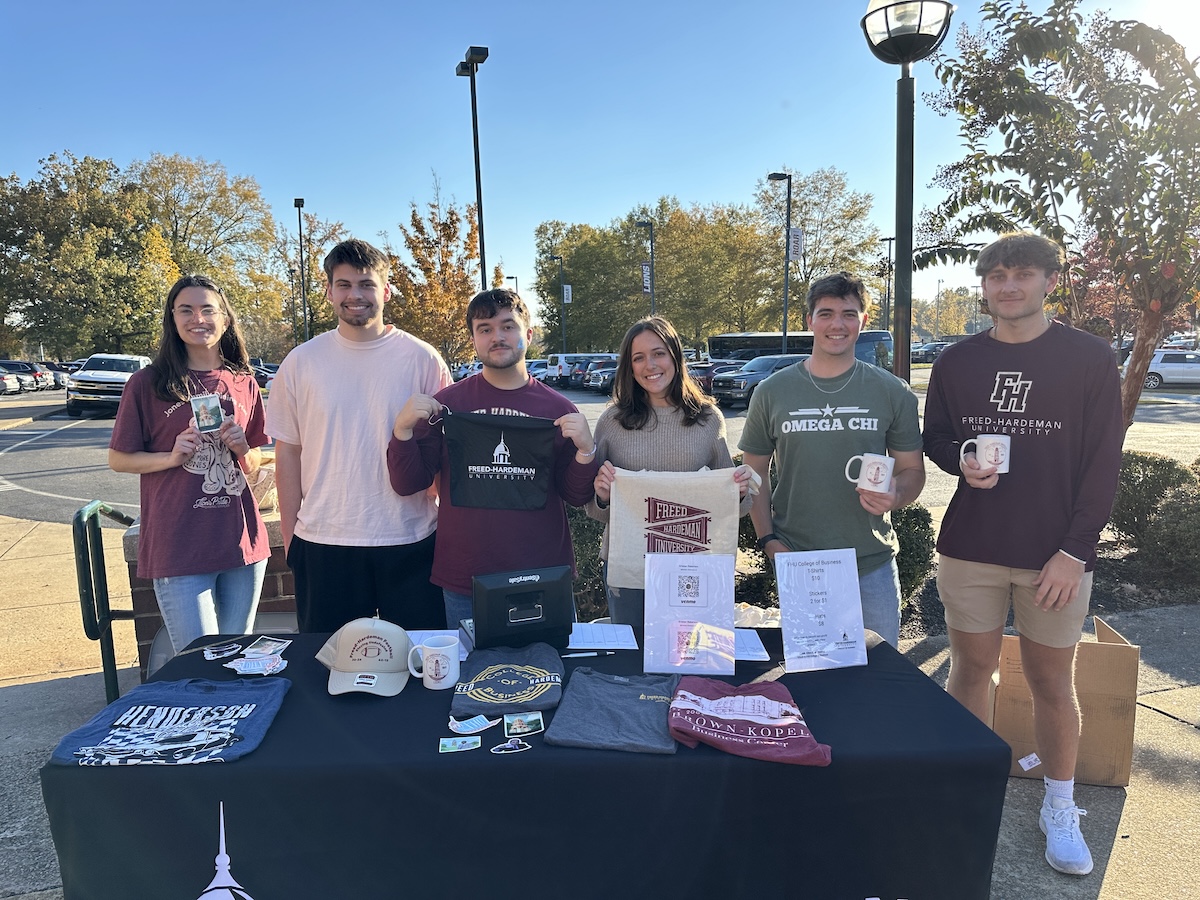
Personal Selling: Students Make a Difference Through Sales and Service
Students in Freed-Hardeman University’s Personal Selling class transformed simple products such as mugs, chip clips, tote bags and golf towels into meaningful support for four nonprofit organizations during the fall semester. The non-profits that the students got to support this year included the Aspell Recovery Center, Camp NEY-A-TI, Daisy’s Place and Isaiah 117 House. What began as a class project quickly took on a deeper purpose as groups navigated the full sales cycle to raise money, strengthen community connections and help their chosen organizations plan for future marketing success.
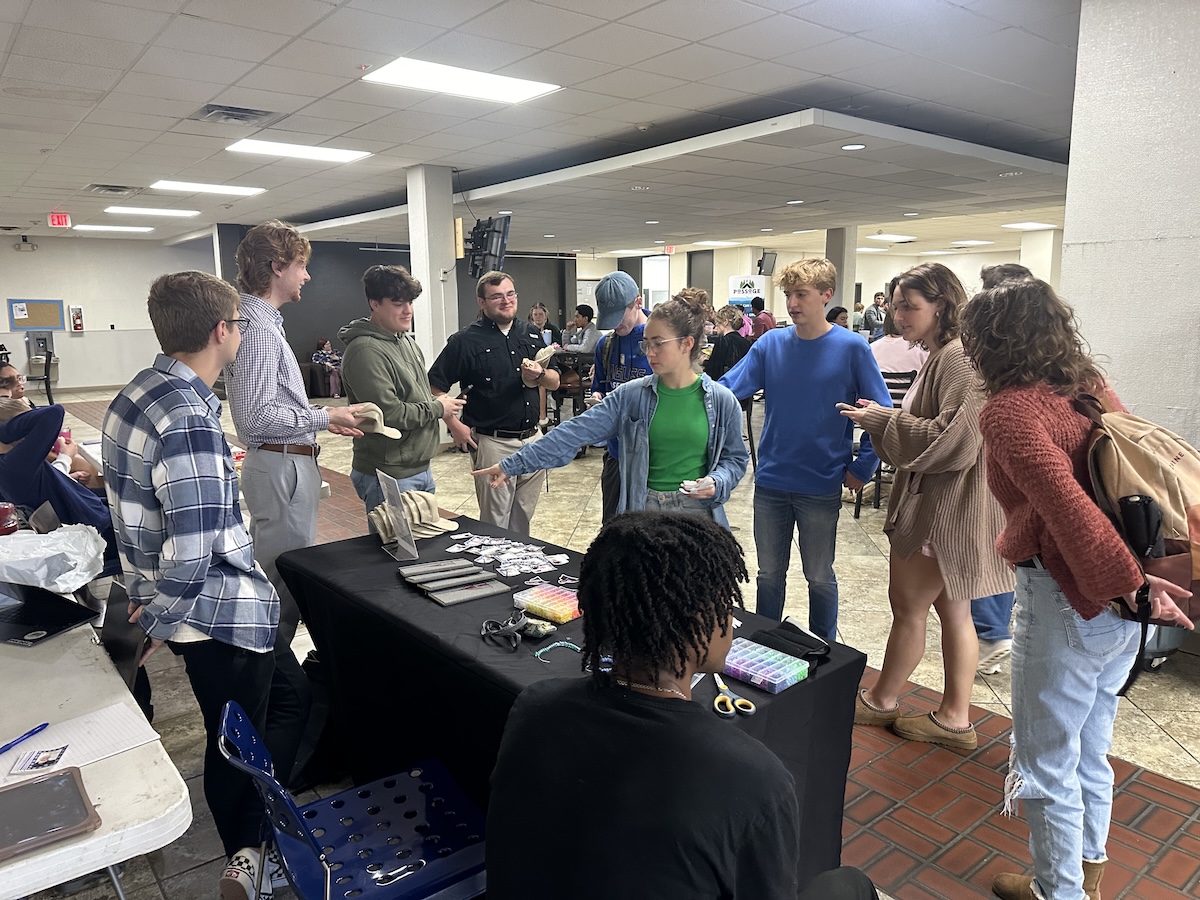
Personal selling class members market their products at locations around campus.
A Project Rooted in Real Experience
The project is led by Dr. Kristen Roberson, director of graduate business programs and assistant professor of marketing. Although the Personal Selling class has existed for many years, this hands-on nonprofit project has been a central part of the course since 2019. Dr. Roberson introduced it after students expressed difficulty connecting classroom concepts to real world application.
“It gives the students the ability to manage the whole sales process, from prospecting and qualifying to making the sale and managing inventory and budgets.” Dr. Roberson said. “They get to see what sales is really like while helping organizations that genuinely matter in their communities.”
Over the years, the project has supported a wide range of beneficiaries including various nonprofits, Day of Women, furniture needs for the Brown-Kopel Business Center and the West Tennessee Children’s Home. In some semesters the class has raised around $300, while in others the total has surpassed $11,000.
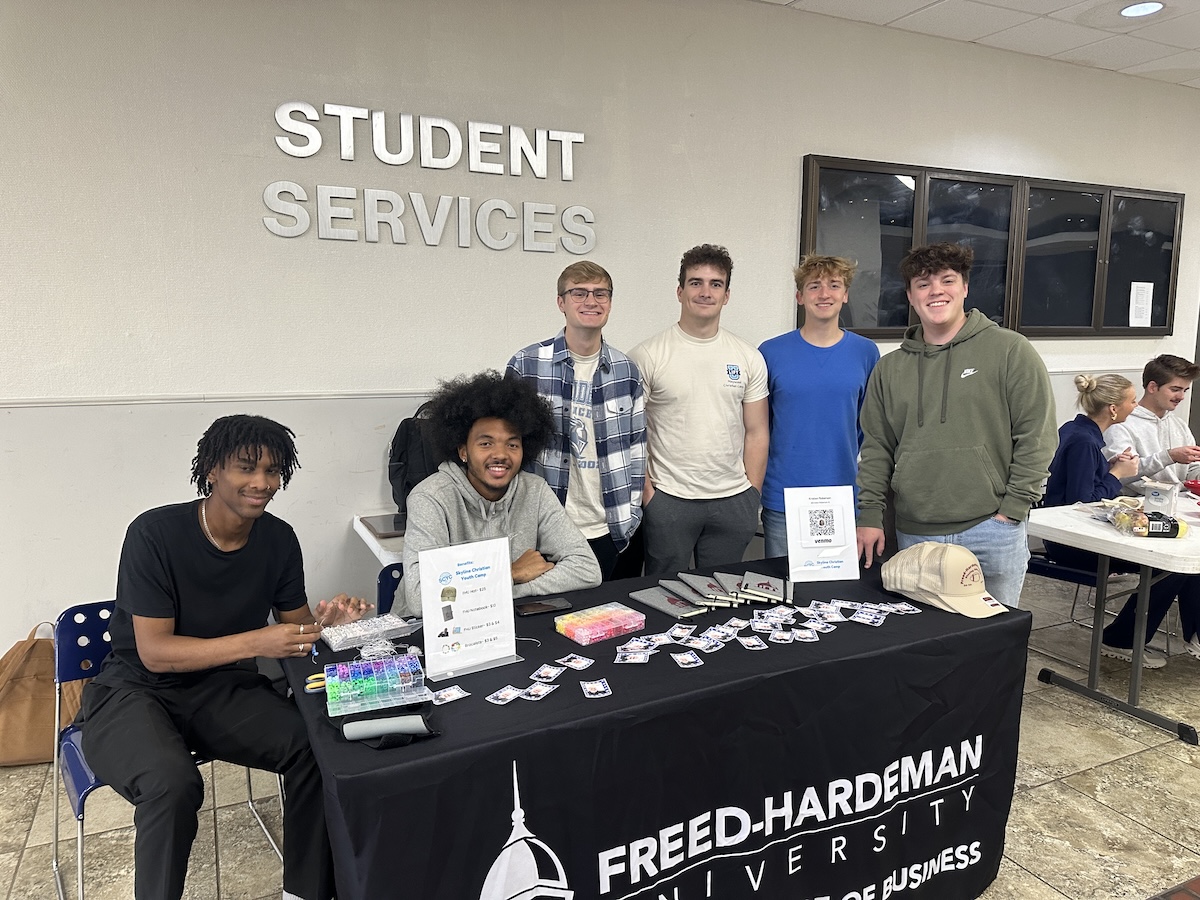
Class members from previous years sold to their friends and classmates in the student center.
Learning Through Doing
This year’s students embraced the opportunity to learn through direct experience, each group given a nonprofit and selecting a product to sell. For many, the project became something far more personal than a grade.
Senior marketing major Eli Neal said his group chose to sell custom Freed-Hardeman mugs to raise money for the Aspell Recovery Center in Jackson, Tennessee. After researching several product ideas, they realized mugs would appeal to both students and employees, something practical enough to use every day or thoughtful enough to give as a gift. Their sales efforts took them all over campus including the student center, hallways between classes and various events throughout the semester.
“Working with a team always teaches me something new,” Neal said. “From learning how to communicate with different people to figuring out new ways of selling, it has been a great experience. Knowing the profits go toward a nonprofit that is active in the community is the most rewarding part.” Neal also enjoyed the friendly rivalry among groups, explaining that competition contributed to the overall excitement of the project. “We always celebrated each other’s successes. That kind of community is something special about Freed-Hardeman.”
Reaching the Right Audience
For junior marketing student Jamison Long, the hands-on experience of supporting Camp Ney-A-Ti in Guntersville, Alabama, was one of the most meaningful parts of the semester. His group decided to sell golf towels featuring the university logo in hopes of appealing to a specific audience.
The niche nature of their product created challenges they had to work around. They soon realized that not many students golf, which pushed them to extend their reach beyond campus. They contacted family members, church acquaintances, friends back home and local community members who enjoy golfing. The group also learned to adjust their sales pitch depending on the situation. In some cases the towel was presented as a sweat towel or even as a cleaning cloth for glasses or car interiors. Long laughed as he described how creative the pitches became. “Not everyone golfs, so you have to get creative.”
One of Long’s most memorable experiences occurred at the Freed-Hardeman Launch Career Expo, where his group interacted with dozens of potential customers. “Some people bought golf towels, and others just wanted to donate after learning about the nonprofit. Seeing that response was meaningful,” he said. Long explained that the biggest lesson he gained from the project was understanding the importance of teamwork. “You cannot do this alone. You have to trust that everyone in your group will do their part.”
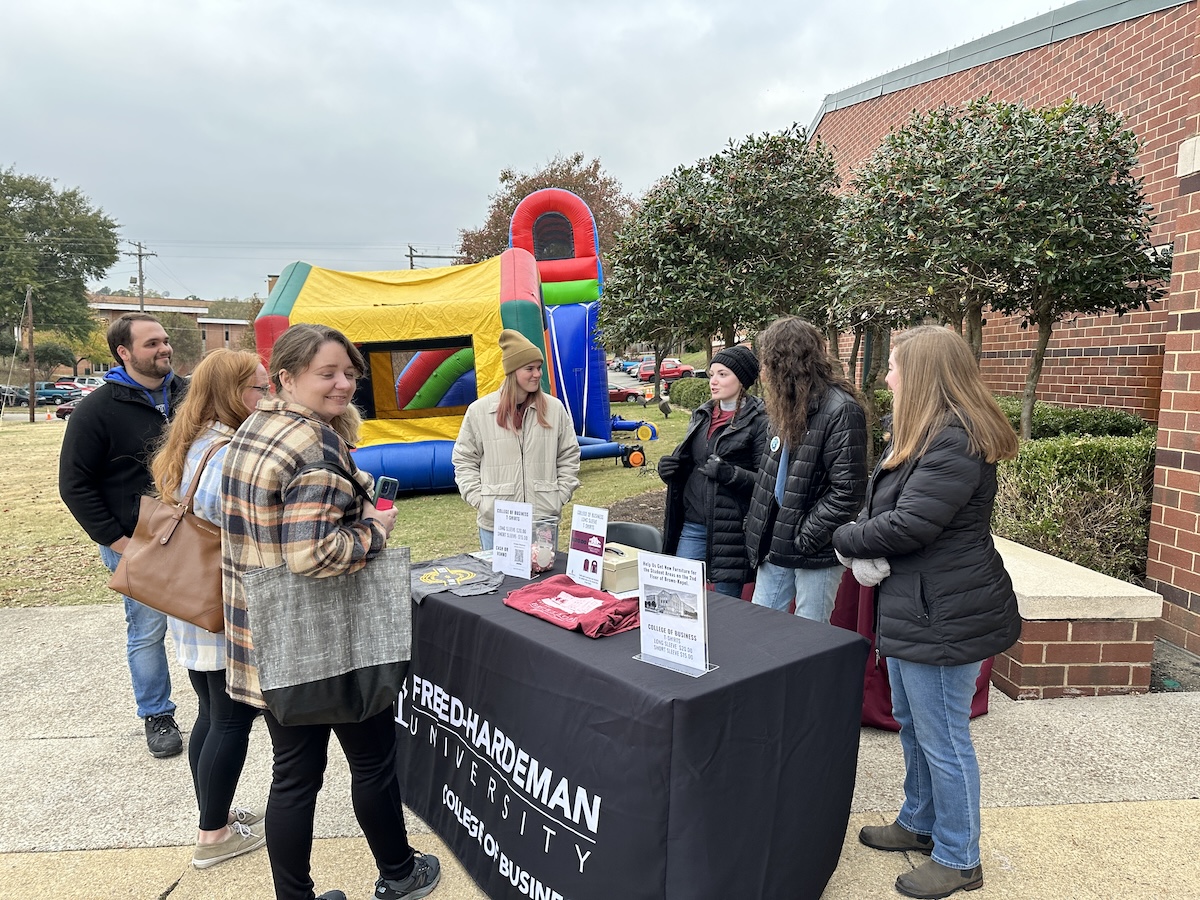
Students take advantage of campus events like Homecoming to gain customers.
Purpose Behind the Product
Junior marketing major Nathan Stanford discovered new strengths in himself during the project. His group sold magnetic chip clips shaped like houses to raise money for the Isaiah 117 House, an organization that supports children entering foster care. The product caught their attention because the house shape closely matched the nonprofit’s logo, making it both practical and symbolic. Their customers included students, faculty, families and individuals who were already interested in foster care advocacy. In many cases, buyers asked questions or later looked up the organization on their own.
Stanford said one of the most challenging parts of the project was managing the money. The group had to track sales carefully, handle cash deposits, maintain accurate records, and regularly update each other on inventory. Selling was also intimidating for him at first. “Putting myself out there is very difficult,” he said. “But this project required it. Little by little, I improved.”
After an Isaiah House representative visited the class, the group’s motivation grew even stronger. “We did not know much about them before choosing them,” Stanford said. “But after hearing their story and values, I was even more determined to raise money for them.” His group ultimately raised more than $850, making them the top performing team in the class.
“It is easy to focus on the numbers and the selling,” he said. “But that is not what it is really about. The awareness is the most important part.”
Takeaways That Last Beyond the Semester
Throughout the semester, students gained confidence in approaching strangers, improved their communication and teamwork skills, and developed a clearer understanding of what real world selling requires. For many, the most meaningful takeaway was discovering that sales is rooted in service, connecting with people, telling stories, and supporting missions that matter.
This year’s class not only strengthened their selling skills but also made an impact far beyond the classroom. And if Dr. Roberson has her way, students will continue experiencing this project and the lives it touches for many years to come.
